Drug-Resistant Salmonella Is Rising in U.S. Poultry Data: What the Report Shows
An advocacy analysis of USDA data reports a growing share of illness-linked and drug-resistant salmonella strains; the evidence deserves context, not alarm.
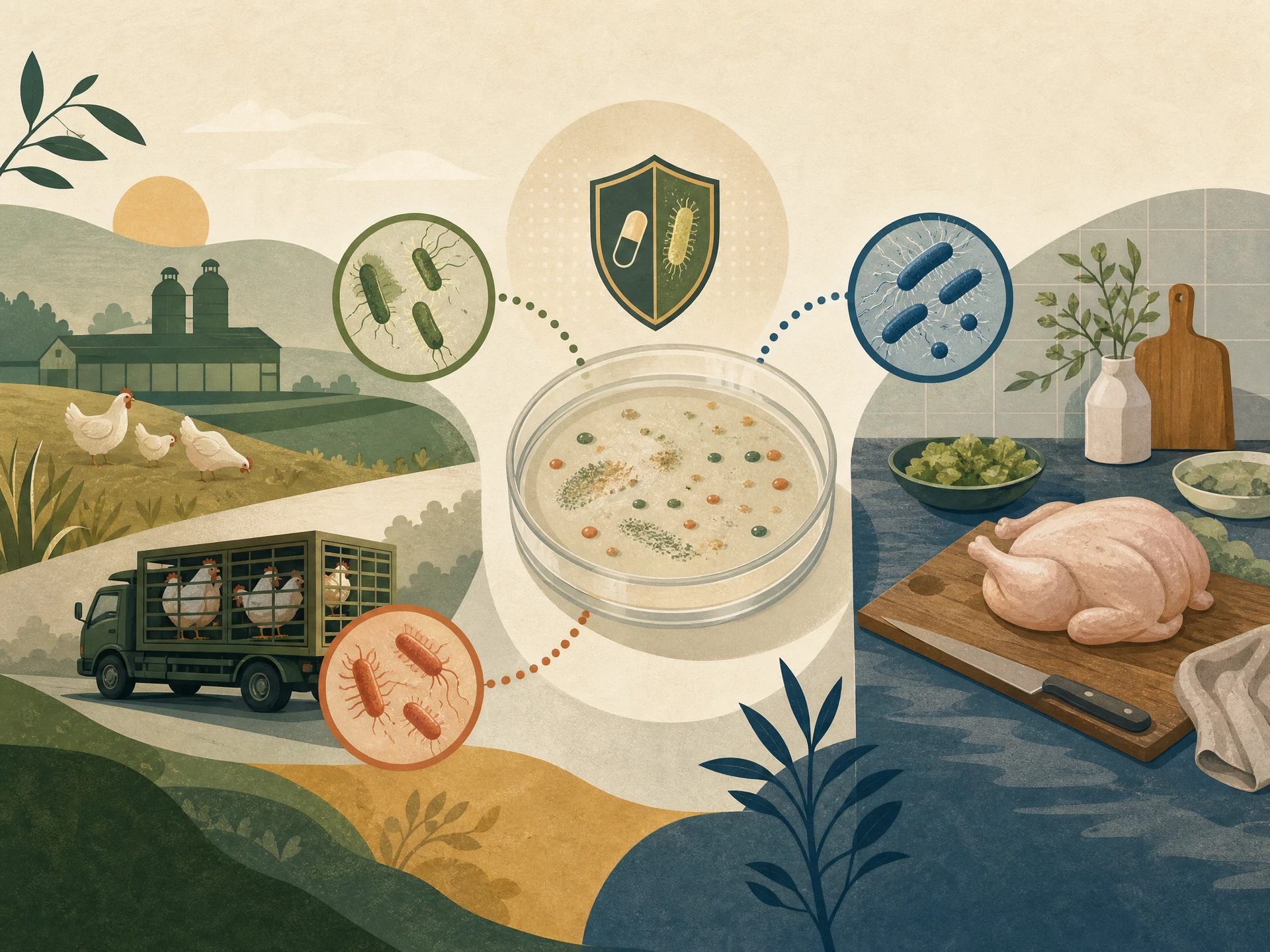
A new analysis of U.S. poultry-testing data raises a precise concern: the salmonella detected in the industry appears to be changing, with strains linked to human illness and resistance to important antibiotics accounting for a larger share of findings than they did a decade ago. The numbers are consequential, but they need careful reading.
What the analysis reported
Farm Forward, an animal-welfare advocacy organisation, analysed data from the U.S. Department of Agriculture's Food Safety and Inspection Service. According to reporting by The New Lede and Wisconsin State Farmer, three strains—infantis, enteritidis, and typhimurium—represented about 68% of salmonella detected in the poultry industry in 2025, compared with 25% in 2014.
The analysis also reported that more than 73% of salmonella-contaminated poultry samples in 2025 were resistant to at least one medically important antibiotic. The comparable figure cited for 2014 was 48%. These are proportions within the analysed detection data; they do not mean that the same share of all poultry products is contaminated.
Why strain and resistance matter
Salmonella is not one uniform organism. Different strains vary in how often they are associated with human illness, while antibiotic resistance can make some infections harder to treat. Tracking which strains appear in production data helps regulators and researchers understand risk beyond a simple positive-or-negative result.
The report did not establish why the strain mix changed. An observational trend can point toward questions about breeding, husbandry, processing, antimicrobial use, surveillance, or other pressures, but it cannot by itself prove which factor caused the change.
Who is making the claim
Source identity matters. Farm Forward campaigns for changes in animal agriculture, so its interpretation should be labelled as advocacy analysis rather than presented as a regulator's conclusion. The underlying reference to USDA data gives the findings a testable base, while USDA and poultry-industry responses provide necessary context about oversight, prevalence standards, and existing controls.
That combination is more informative than choosing one voice. Readers should be able to see the reported numbers, understand who calculated them, and know where interpretation begins.
What consumers can and cannot conclude
The analysis is about a U.S. industry dataset, not a recall of a named brand or a finding about one item in a reader's kitchen. Contamination cannot be reliably judged by appearance. Established kitchen practices—keeping raw poultry separate from ready-to-eat food, cleaning hands and surfaces, avoiding cross-contamination, and cooking appropriately—remain relevant, but they do not replace regulatory prevention upstream.
The larger policy question is whether food-safety systems measure the strains most likely to cause illness and respond quickly enough when the composition of risk changes. Better public reporting would connect prevalence, strain type, resistance, illness burden, and enforcement outcomes without collapsing them into a single alarming number.

Features Editor
Julian Reed
Julian covers travel, mobility, culture, and the evolving meaning of luxury. He is interested in places and products that reward attention rather than announce themselves.
Read next

The Dinner Party Without the Performance
A generous evening needs good pacing, one forgiving menu, and hosts who are present at their own table.

Cooking by Color: A Late-Summer Table
Use color as a practical guide to a seasonal meal that feels abundant without becoming complicated.

The Weeknight Pantry That Actually Cooks Well
A small group of flexible ingredients can make ordinary dinners faster without turning the kitchen into storage.