A Better Evening Wind-Down, One Cue at a Time
The end of the day becomes easier to recognise when light, sound, and one repeated action change together.
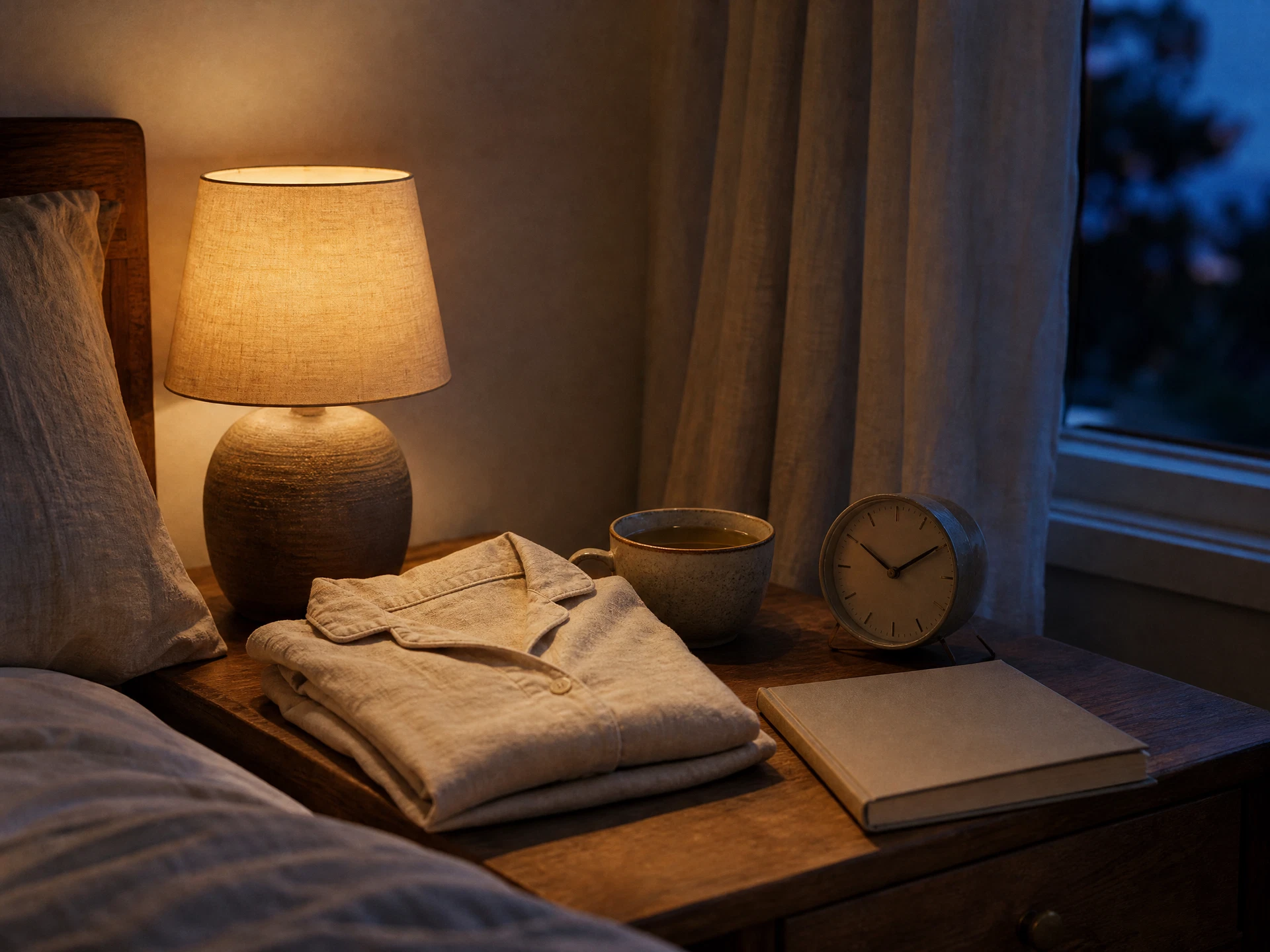
An evening routine does not need to be elaborate to be useful. Its first job is to make the transition from activity to rest visible. One reliable cue can do more than a long list that is abandoned after three nights.
Choose a closing signal
Pick an action that marks the end of active work: close the laptop, clear one surface, set tomorrow’s first item by the door, or switch off the brightest light. Use the same signal most nights. Repetition helps the environment announce that the day is changing.
Lower stimulation in layers
Dim overhead lighting, reduce background audio, and move the phone away from the place where you intend to rest. The aim is not perfect silence or total disconnection. It is a gradual reduction in decisions, alerts, and bright visual input.
Keep the sequence short
Choose two actions after the closing signal, such as washing up and reading a few pages. Put longer rituals in the optional category. A routine is more dependable when its essential version can happen even after a late evening.
Protect the room from tomorrow
Write down unfinished thoughts rather than carrying them into bed. Prepare only what genuinely reduces morning friction. Excessive planning can keep the mind in work mode, so stop once the next step is clear.
Sleep difficulty can have many causes, and a routine is not a treatment for persistent insomnia or other health concerns. Seek professional support when sleep problems continue or affect daily functioning. For many ordinary evenings, however, one repeated cue is enough to begin making rest feel like a destination.

Wellbeing & Food Editor
Elena Ortiz
Elena explores food, movement, and hospitality through an accessible lens. Her stories connect practical guidance with the sensory pleasure of daily life.
Read next

The 90-Minute Morning Reset
A realistic sequence for light, movement, breakfast, and focus before the day becomes crowded.

The Walking Routine You Can Keep
A repeatable route, realistic cue, and flexible minimum can make everyday walking easier to sustain.