Why Gardener Style Is Moving From Allotments to City Streets
Practical garden clothing and nature-led materials are influencing city wardrobes, but the trend looks different from the skilled physical work that inspired it.
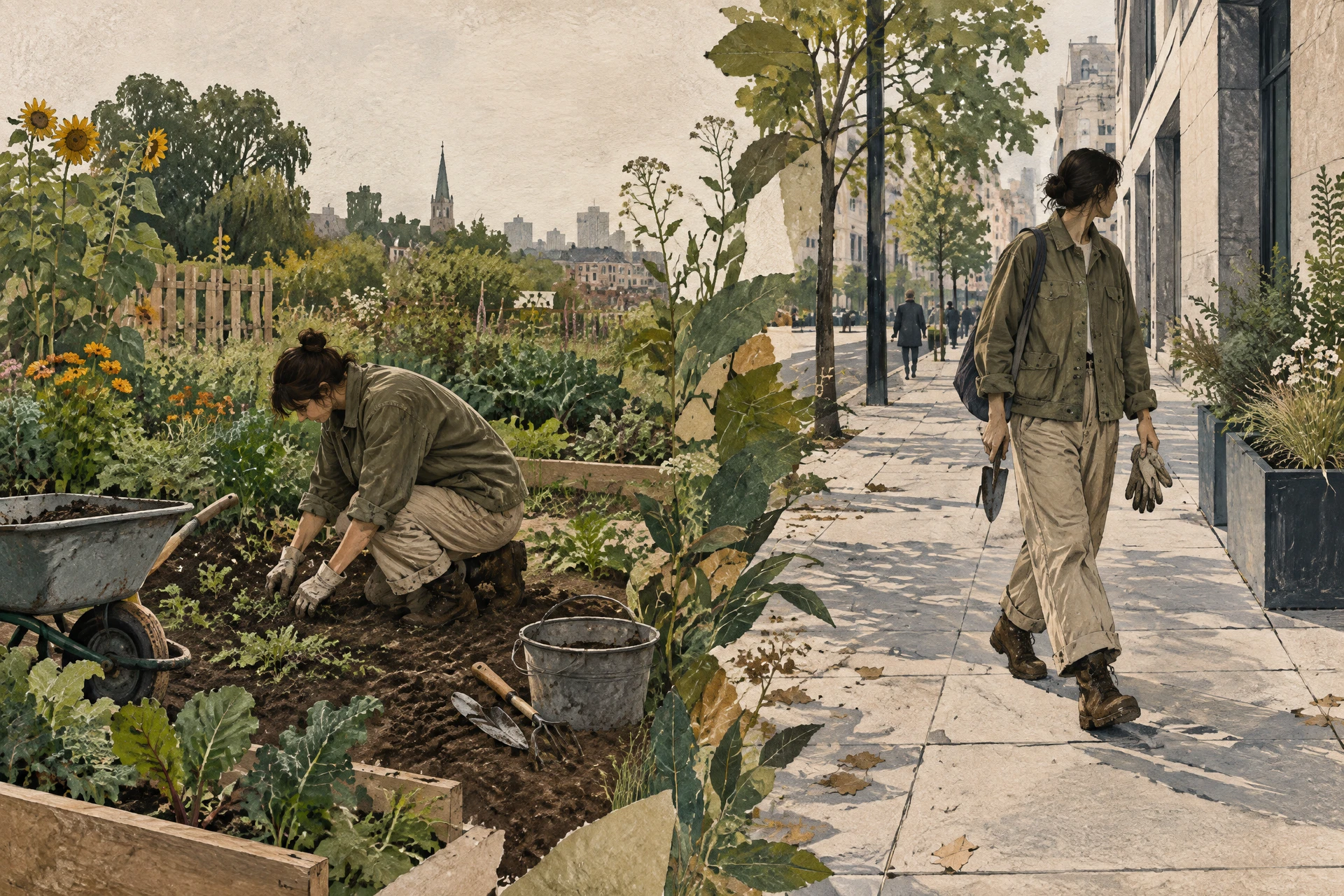
Gardening clothing begins with a job. A jacket needs useful pockets. Trousers need room to kneel and move. Footwear needs to handle wet ground. Fabrics have to tolerate soil, weather and repeated wear. When those practical forms appear in city fashion, they carry both usefulness and an image of another way of living.
The practical wardrobe behind the look
The basic language is familiar: canvas chore jackets, loose trousers, clogs or sturdy boots, caps, gloves and bags designed around tools rather than decoration. None of these pieces belongs only to gardening. Their broader history includes agricultural work, workshops, uniforms and everyday repair.
What makes gardener style distinct is the setting it evokes. Soil, allotments, seed packets, sheds and public gardens suggest patience and seasonal attention. In an urban wardrobe, the clothing can become a shorthand for those values even when the wearer is nowhere near a garden.
Why nature is becoming a fashion language
The Guardian's 11 September report connected gardening figures, mossy presentations, mycelium materials and practical workwear with a larger cultural interest in horticulture. The examples do not prove that one style has taken over fashion. They show that gardens now provide designers and image-makers with a recognisable vocabulary.
Part of the appeal is material. Natural texture can feel like an alternative to smooth digital surfaces. Part is emotional: gardening implies time, care and visible consequence. A planted space changes slowly, and its results cannot be refreshed with a screen gesture.
Public gardens change who can participate
The trend can look exclusive if it is reduced to expensive rural clothing or private land. Community gardens, allotments and public growing programmes offer a different frame. They place gardening inside cities and make it a shared practice rather than a country-house fantasy.
That access question matters to fashion coverage. A visual trend can borrow the authority of work while ignoring who has space, time, tools or secure housing. Describing those limits does not cancel the aesthetic. It makes the cultural picture more accurate.
Style is not the same as skill
Garden work demands knowledge: soil conditions, seasons, pests, water, tools and the physical limits of a site. Wearing a chore jacket does not confer that knowledge. The most honest version of the trend keeps a distinction between appreciating functional design and performing an identity that other people practise as labour.
This is also why the article is not a shopping guide. Existing clothes that can withstand use may express the idea better than buying a newly marketed “gardener” wardrobe. Function is measured through wear, repair and comfort, not through a label.
What the movement says about city life
Gardener style becomes interesting when it reveals a desire rather than a product category. City residents may be looking for tactility, slower rhythms, practical competence and contact with living systems. Clothing gives that desire a visible form.
The form will continue to change. Some versions will remain grounded in work; others will become seasonal fashion imagery. Readers can tell the difference by asking what a garment enables, whose labour shaped its meaning and whether the story leaves room for real gardens and gardeners.
LifestylesJournal did not conduct the interviews in the source report and does not endorse the brands it mentioned. This article interprets the reported development through function, access, labour and cultural context.

Editorial Director
Maya Chen
Maya writes about design, modern rituals, and the choices that make everyday life more considered. Her work looks for quiet intelligence in rooms, objects, and routines.
Read next
The Capsule Wardrobe, With Character
A smaller wardrobe need not feel anonymous. Start with proportion, texture, and the pieces that already make you stand taller.
Finding a Personal Style Without Chasing Trends
A useful personal style is built from observation, repetition, and the clothes that support a real week.
Buy Less, Wear Better: A Fabric-First Guide
Reading fibre, weave, weight, and construction makes it easier to choose clothes that earn a long life.