Kennedy Center Ceiling Damage Renews the Debate Over a Two-Year Closure
A partial grand-foyer ceiling collapse caused no injuries but intensified a disputed case for closing the landmark for major renovations.
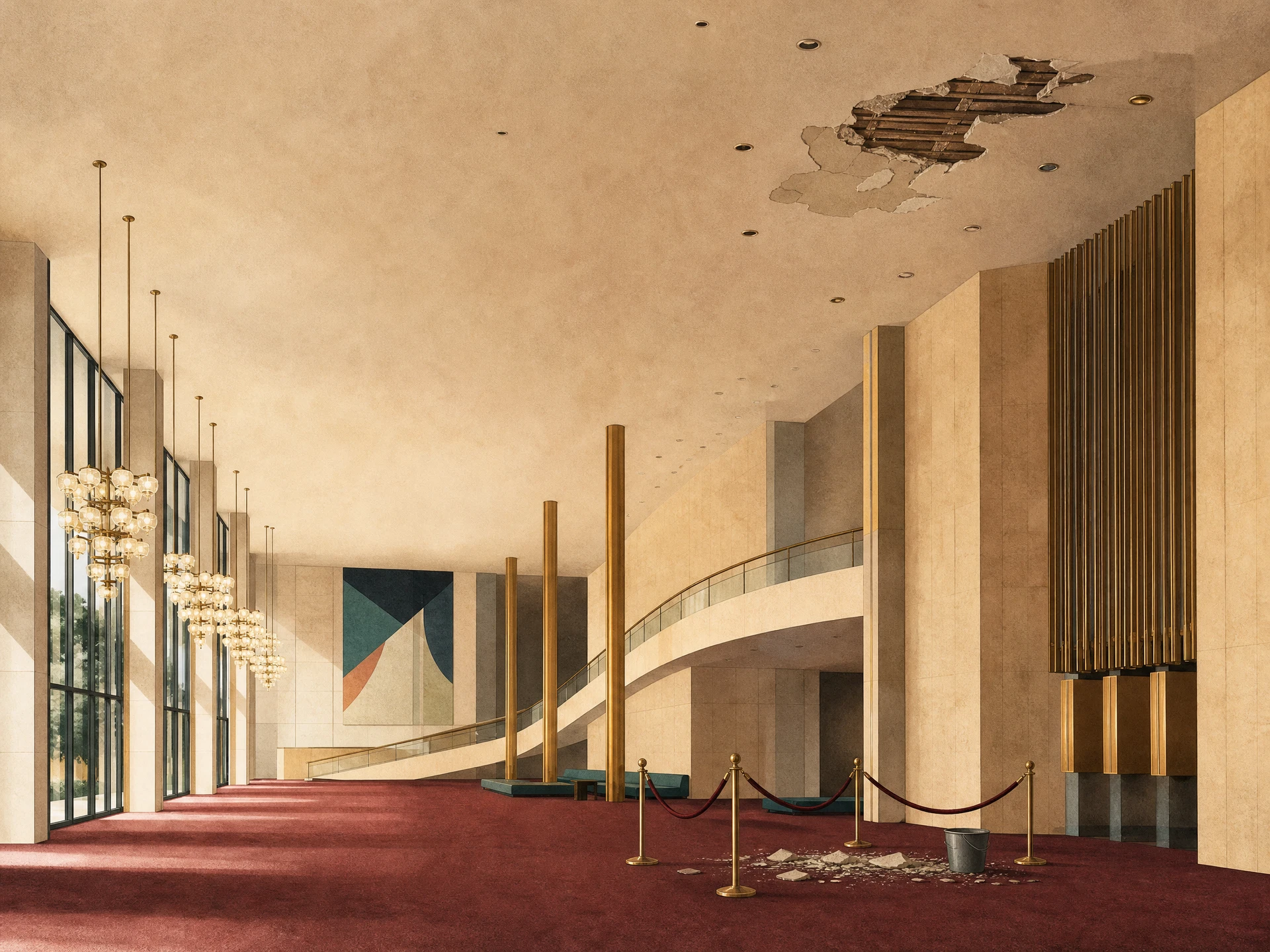
A piece of the grand-foyer ceiling at the Kennedy Center fell during stormy weather on Friday evening. No one was injured. That narrow set of confirmed facts matters because the damage was quickly drawn into a much larger argument about the building, its stewardship, and a proposed two-year renovation closure.
What happened inside the foyer
Associated Press reporting described a partial collapse involving ceiling material in the grand foyer. The affected area was closed off, and the center said there were no injuries. The report did not establish an independent engineering cause. That distinction is important: visible damage can be documented immediately, but conclusions about structural failure, deferred maintenance, weather, or design require technical assessment.
How the damage entered the closure debate
A Kennedy Center spokesperson used the incident to renew the institution's argument that the complex needs extensive work. The board has backed a plan that would close the venue for two years while a renovation estimated at $250 million is carried out. Describing the incident as the consequence of “decades of neglect” is the center's position, not a finding established by the report.
The practical question is larger than one damaged section of ceiling. A full closure changes performance schedules, employment, touring plans, audience access, and the relationship between a major cultural institution and the city around it. Phased construction may keep parts of a venue operating but can increase complexity and extend disruption. A complete shutdown can concentrate work but imposes a sharper cultural and economic pause.
A plan that remains contested
The proposed closure sits inside continuing legal and community disputes about governance and the institution's direction. Those proceedings are not resolved by the ceiling incident. Physical damage can strengthen the case for urgent inspection without settling whether a particular renovation timetable, budget, or closure model is the right response.
For readers, the useful way to follow the story is to separate four tracks: the condition of the building, the findings of engineers, the board's proposed scope and schedule, and the courts' treatment of contested decisions. Each moves on a different timetable and carries a different standard of evidence.
Why cultural infrastructure needs visible care
Performance halls are experienced as stages, seats, acoustics, and public gathering spaces, but they are also complex buildings with roofs, mechanical systems, finishes, circulation routes, and safety regimes. Maintenance is rarely visible when it works. It becomes public at the moment a venue must close an area, cancel activity, or explain damage.
The immediate incident ended without injury. What follows should be judged through published inspections, a transparent work plan, clear responsibility for cost and disruption, and honest distinctions between urgent repair and broader institutional ambition.

Wellbeing & Food Editor
Elena Ortiz
Elena explores food, movement, and hospitality through an accessible lens. Her stories connect practical guidance with the sensory pleasure of daily life.
Read next

Nashville Begins Its Dolly Parton Airport Naming Process—But the Final Name Is Not Set
A 6–0 airport-authority vote starts a public naming process while leaving the final name, cost, approvals and implementation timeline unresolved.

How L.A.'s Artists Turn Neighbourhoods Into a Cultural Map
A city without one cultural centre can be understood through the artists, musicians, photographers, designers and collectors rooted in its different neighbourhoods.
Lucas Museum Preview Reveals a Home for Narrative Art
A Los Angeles press preview reveals a museum built around visual storytelling before its planned September 22 public opening.