How L.A.'s Artists Turn Neighbourhoods Into a Cultural Map
A city without one cultural centre can be understood through the artists, musicians, photographers, designers and collectors rooted in its different neighbourhoods.
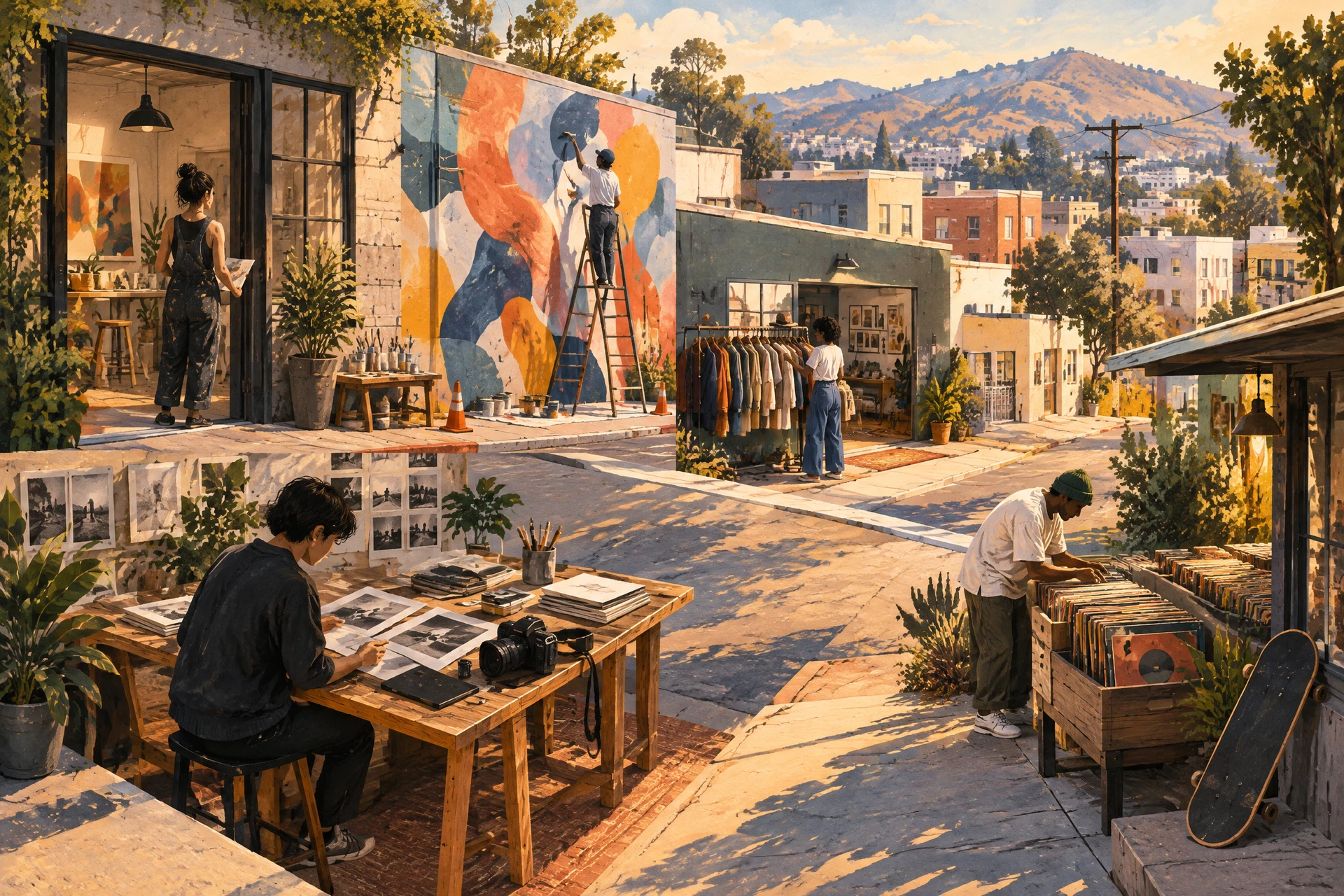
Los Angeles can be difficult to summarise because it does not organise culture around one centre. Its creative life is distributed across neighbourhoods, studios, rehearsal rooms, shops, archives, backyards and streets. A new Los Angeles Times Image package approaches that complexity through people rather than a conventional list of attractions.
A city that resists one cultural centre
Many city guides rely on a compact core. Los Angeles works differently. Distance, traffic, migration, housing and local history shape several overlapping centres, each with its own relationships and creative infrastructure.
That structure can feel fragmented from outside. For artists, it can produce strong local networks. A photographer's archive, a designer's materials, a musician's rehearsal space or a collector's room becomes part of how a neighbourhood remembers and represents itself.
Artists are guides because they notice systems
Artists do more than point toward places. Their work can reveal how a place is changing, what it is trying to preserve and whose stories are visible. A studio practice may connect architecture, family memory, street style, sound, food, language and local gathering spaces in ways that a generic destination list cannot.
The source package profiles image-makers and cultural figures across the city. LifestylesJournal did not conduct those interviews or make the photographs. The value here is the editorial method: understand a city through the people producing culture inside it.
Neighbourhood identity is more than an aesthetic
Creative coverage can flatten neighbourhoods into colour palettes or backdrops. A stronger account treats style as evidence of deeper conditions. Clothing may reflect climate and community. Murals may hold political and family memory. Music can connect a local scene to migration and industry. Archives can preserve objects that institutions overlooked.
That context also discourages a familiar mistake: treating a working neighbourhood as a discovery made by outsiders. Creative communities existed before a magazine package or visitor arrived. Coverage should describe their work without claiming ownership of it.
Archives make culture visible over time
An archive does not have to be a formal institution. It may be a collection of photographs, flyers, recordings, garments, skate graphics or objects saved through repeated use. Such collections show that culture is accumulated, not invented in one season.
For readers, archives offer a way to see continuity. A present-day style may contain decades of local reference. A young artist may be in conversation with family photographs, earlier music scenes or the design language of nearby businesses.
A map made from relationships
The most useful cultural map is not necessarily a route to copy. It is a set of relationships: artist to neighbourhood, workspace to street, archive to memory, and individual practice to a wider community. Those relationships explain why the same city can feel different from one district to the next.
This approach also avoids turning people into stops on an itinerary. Readers can learn from the way artists observe their surroundings without seeking private spaces, copying a source's route or treating every location as a visitor attraction.
How to read a decentralised city
A people-led cultural guide asks different questions. Who has been making work here? What materials and memories recur? Which spaces allow people to gather? What pressures threaten continuity? Which stories are visible, and which remain local or private?
Those questions produce a slower understanding of Los Angeles. The city becomes less like a collection of famous sites and more like a network of neighbourhoods shaped by people who keep making, recording, wearing, performing and sharing culture.
Features Editor
Julian Reed
Julian covers travel, mobility, culture, and the evolving meaning of luxury. He is interested in places and products that reward attention rather than announce themselves.
Read next
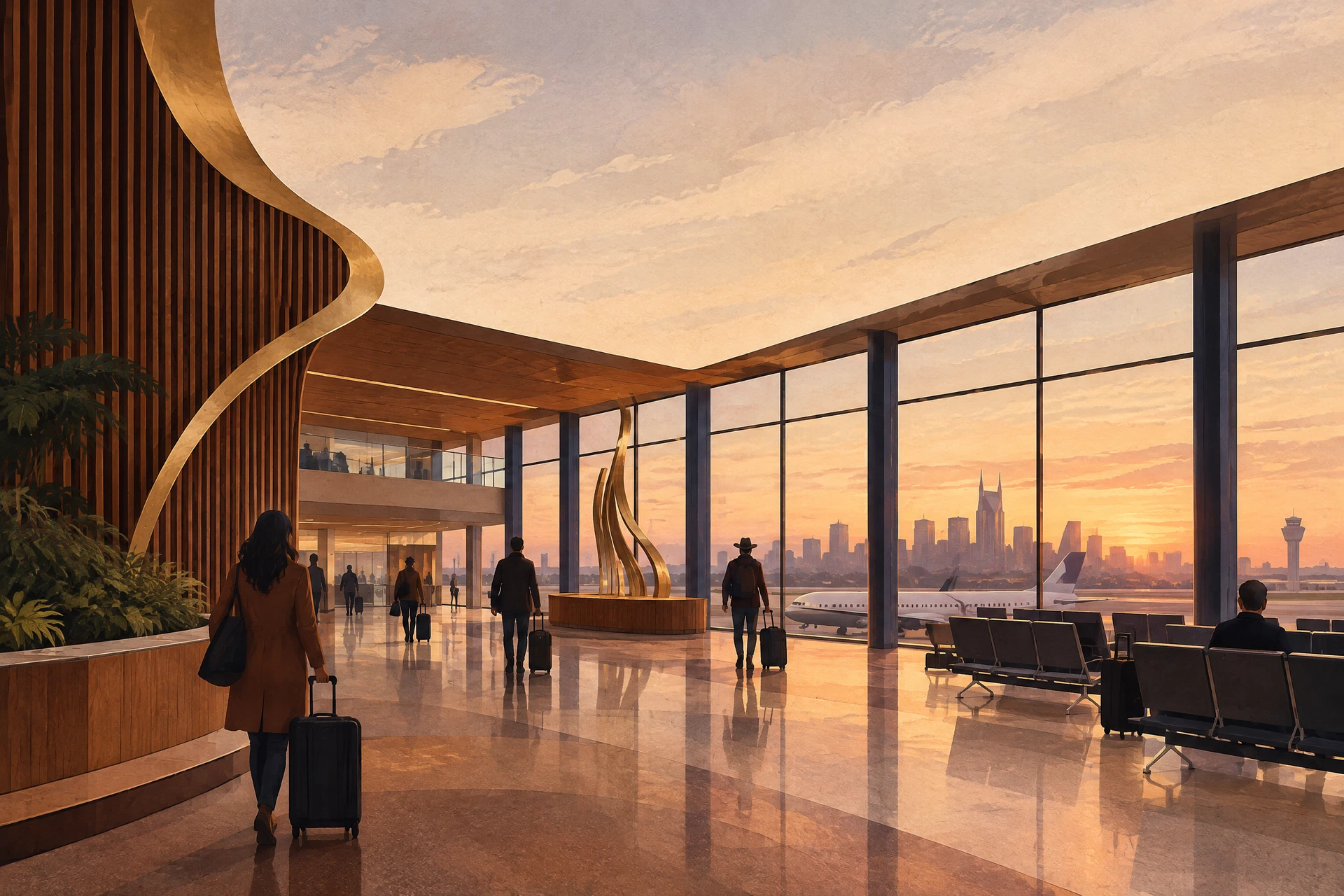
Nashville Begins Its Dolly Parton Airport Naming Process—But the Final Name Is Not Set
A 6–0 airport-authority vote starts a public naming process while leaving the final name, cost, approvals and implementation timeline unresolved.
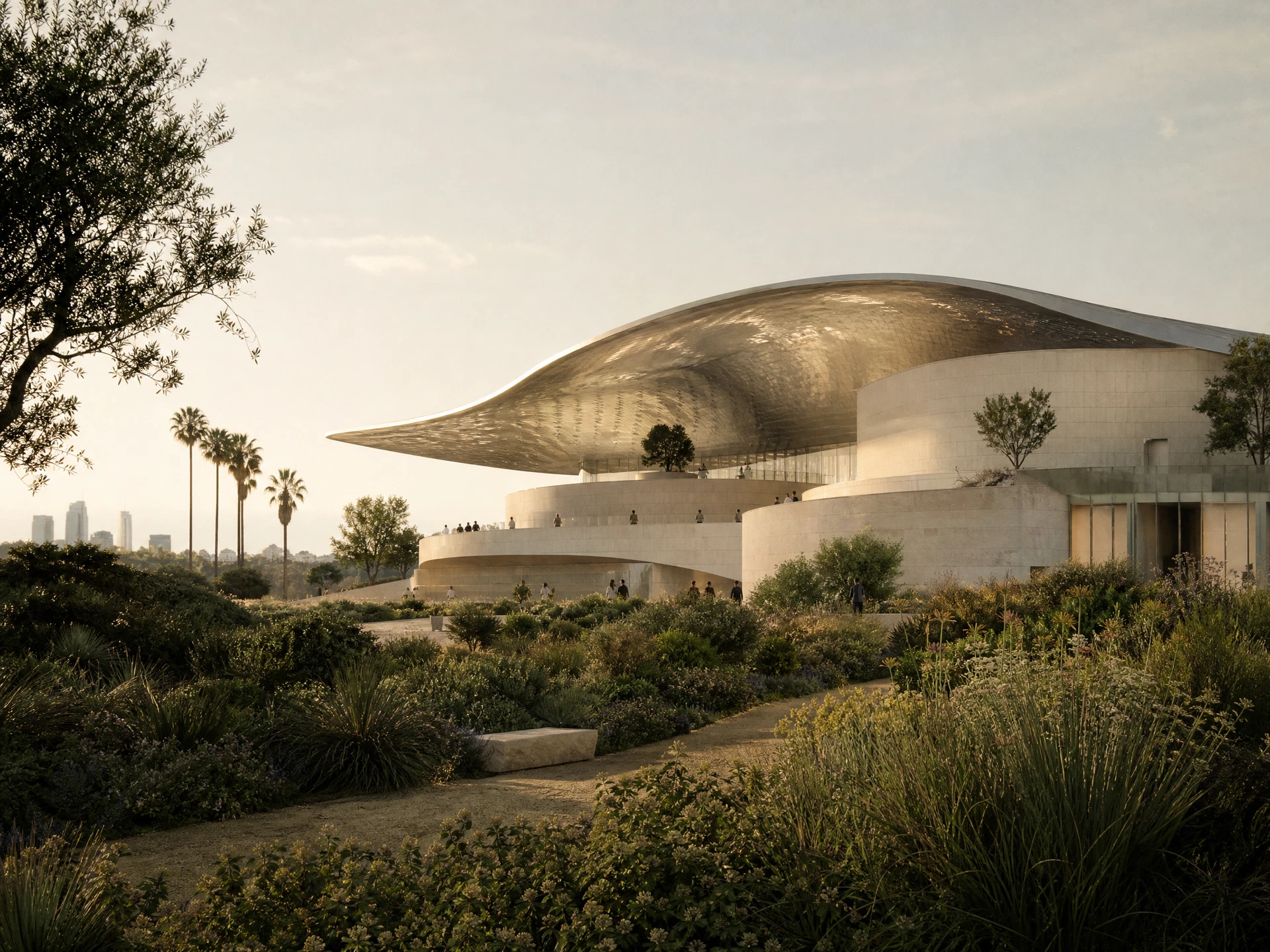
Lucas Museum Preview Reveals a Home for Narrative Art
A Los Angeles press preview reveals a museum built around visual storytelling before its planned September 22 public opening.
Ravyn Lenae on Blue Island, Viral Attention and Refusing Genre Limits
A new NPR conversation connects the artist's latest work with the pressure of viral visibility, genre expectations, choreography and personal change.