
How Nadi Utsav 2026 Turns the Yamuna Into a Cultural Archive
IGNCA’s seventh river festival combines scholarship, documentary film, exhibitions, workshops and performance to examine the Yamuna as ecology, memory and living culture.
Nadi Utsav opened at the Indira Gandhi National Centre for the Arts in New Delhi on 24 September 2026 with the Yamuna at the centre of its programme. The seventh edition runs through 26 September, while the official schedule lists its exhibition strand through 30 September.
That difference in dates matters. It prevents a three-day festival from being flattened into one undifferentiated event, and it helps explain the programme on its own terms: seminar sessions, documentary film, exhibitions, workshops and performances each hold a different kind of record.
LifestylesJournal did not attend the inauguration, interview participants or review the films and exhibitions. This article is an evidence-based reading of the published programme, supported by same-day captioned coverage confirming that the inauguration and public displays took place.
The useful idea is a river as cultural archive
An archive is often imagined as a room of documents. A river creates a more dispersed record. Its meaning can appear in maps and measurements, but also in oral memory, seasonal practice, photographs, songs, films, architecture, work and ritual.
Nadi Utsav makes that distributed record visible by placing several formats beside one another. The programme does not ask one exhibition, one lecture or one performance to explain the Yamuna alone. Instead, each format contributes a different way of noticing what has been preserved, changed, forgotten or argued over.
Calling the Yamuna a cultural archive is LifestylesJournal’s organising interpretation of that structure. It is not a claim that every programme item reaches the same conclusion, and it is not proof of an environmental outcome.
Scholarship treats the river as evidence and argument
The official seminar theme is The Eternal Yamuna: Chronicles of Conflict, Biotic Healing, and the Socio-Cultural Hearth. That language places environmental change beside history and lived culture rather than separating them into unrelated subjects.
The schedule includes academic discussions and special sessions on river restoration, floodplains, changing river width, culture, conservation and innovation. It also lists a conversation about the life, culture and traditions of the Nishad community.
A programme title identifies a question or field of discussion; it does not by itself establish a scientific finding. Responsible coverage therefore treats these sessions as evidence of the festival’s scope, not as conclusions that LifestylesJournal can endorse without papers, presentations or independent review.
Documentary film records movement, voice and time
The documentary strand is titled The River as an Archivist. Film is well suited to a river because it can record movement: changing water, work along the bank, voices, routes, gestures and the pace of a landscape.
A photograph can hold one moment. A documentary can place moments in sequence and show how memory is narrated. That makes film more than decoration inside a culture programme. It can preserve testimony and practice while also revealing where a filmmaker has chosen to stand, whom they have asked to speak and what remains outside the frame.
The published schedule confirms a programme of films about rivers and riverine culture. It does not provide LifestylesJournal with a basis to review unseen films, rank them or claim that they represent every community connected with the Yamuna.
Exhibitions offer several ways of looking
The official programme lists a group of exhibitions rather than one definitive display. Among the named projects are Yamuna: The River of Divine Grace, Culture, and Living Heritage; Seeking Yamuna; Lupt; The Shape of a Relationship; YaRI — Yamuna River Initiative; Leap of Hope; and Water Footprints.
Those titles suggest different lenses: devotion and living heritage, photography, absence, relationships, student participation, hope and everyday consumption. Their coexistence is the significant fact. The river is presented as something seen through multiple practices rather than a single picture.
The schedule places the exhibition period from 24 to 30 September. That does not mean every seminar, screening, workshop or performance continues for all seven days. The festival programme itself runs from 24 to 26 September, so public copy should keep the two time frames separate.
Workshops turn observation into participation
The programme includes Water Footprints, described as an activity for calculating daily footprints, learning about mindful consumption and making conservation pledges. It also lists Rang-E-Fursat, a painting activity at Vasudev Ghat, and a school collaboration titled Dilli Ki Jalkatha.
These activities shift the role of the visitor from watching to making, calculating or reflecting. That participatory move is culturally important because it asks how public memory is produced, not only how it is displayed.
Participation does not automatically create measurable conservation impact. A pledge is not the same as verified behaviour change, and a workshop is not a substitute for public policy or scientific monitoring. The programme can still be described accurately as an attempt to connect attention with action.
Performance carries knowledge differently
The schedule also includes theatre and a collaboration combining Odissi dance with Haveli Sangeet. Performance communicates through movement, rhythm, staging and shared presence. It can carry an idea about a river without reducing that idea to a diagram or lecture.
That matters in a multidisciplinary festival. Scholarship can define and debate. Film can document. Exhibitions can arrange objects and images. Performance can make memory temporal and embodied. None of those forms needs to replace the others.
The published programme establishes that these forms were scheduled. It does not allow an outside publication to judge artistic quality, audience response or representation without first-hand reporting.
Opening-day confirmation and its limits
Same-day IANS-captioned coverage published on 24 September shows the inauguration at IGNCA and visitors exploring Yamuna-themed exhibits. It confirms that the event moved from announcement to an opened programme.
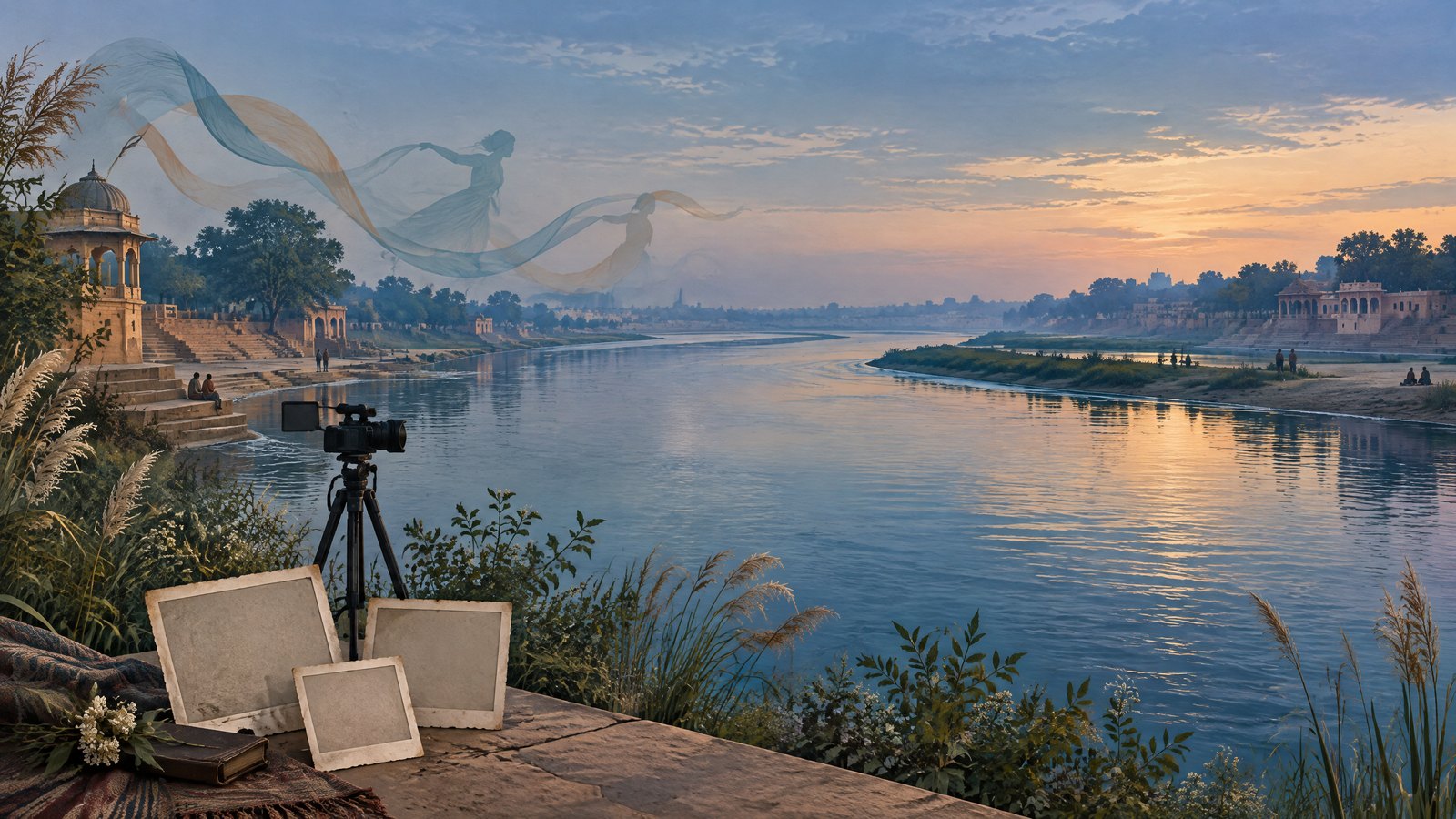
The photographs remain the work of their credited agency and photographer. LifestylesJournal has not reproduced them. The illustration on this page is an original editorial interpretation made for this article, not a depiction of a particular installation, performer or visitor.
The same principle applies to public figures shown in the coverage. Their presence may confirm an inauguration, but it does not determine the meaning of the entire festival or stand in for the many communities whose histories are connected with the river.
What remains after the schedule
The programme’s strongest editorial idea is methodological. A river’s public meaning is assembled across evidence, art, memory and use. No single image can contain it, and no single event can settle the questions surrounding it.
For readers, that is a useful way to approach cultural programmes more generally. Ask what each format can record. Notice who is speaking, what period is being remembered and which claims are measured rather than symbolic. Keep the announced intention separate from observed results.
Nadi Utsav 2026 provides a current example of that layered approach. Its value for this article is not a promise about what the Yamuna will become. It is the decision to treat a river as ecology, history, image, performance and lived relationship at the same time.
Readers can continue through LifestylesJournal’s Culture & Entertainment section, Julian Reed’s author page and the same-site related-reading module. No external event, registration, ticketing or social link is included here.
Features Editor
Julian Reed
Julian covers travel, mobility, culture, and the evolving meaning of luxury. He is interested in places and products that reward attention rather than announce themselves.
Read next
Nashville Begins Its Dolly Parton Airport Naming Process—But the Final Name Is Not Set
A 6–0 airport-authority vote starts a public naming process while leaving the final name, cost, approvals and implementation timeline unresolved.
How L.A.'s Artists Turn Neighbourhoods Into a Cultural Map
A city without one cultural centre can be understood through the artists, musicians, photographers, designers and collectors rooted in its different neighbourhoods.
Lucas Museum Preview Reveals a Home for Narrative Art
A Los Angeles press preview reveals a museum built around visual storytelling before its planned September 22 public opening.