
India’s National Digital Tourism Stack: What Has Been Announced
Ahead of World Tourism Day, the Ministry of Tourism outlined a digital public-infrastructure plan alongside a renewed lesser-known-destinations programme.
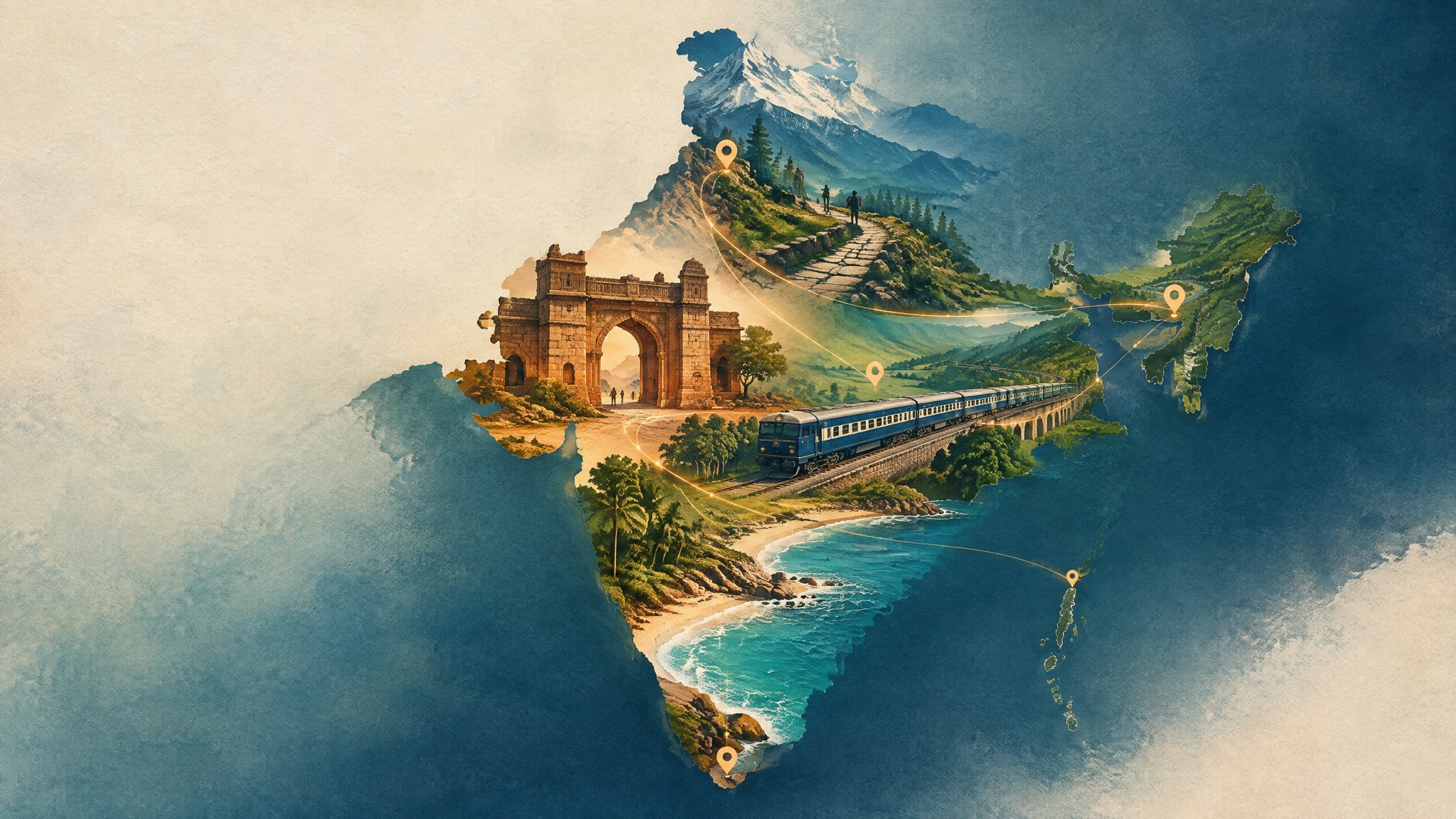
The Ministry of Tourism outlined a National Digital Tourism Stack on 26 September 2026, one day before the central World Tourism Day programme in New Delhi. The official backgrounder said the stack would be unveiled on 27 September alongside Dekho Apna Desh 2.0.
That timing is the first fact to keep clear. During the source window, the stack was an announced initiative scheduled for unveiling. The briefing did not establish that a public service was already available, that travellers had used it, or that its performance had been independently tested.
This article therefore explains the stated design and the questions that remain. LifestylesJournal did not test a platform, make a booking, interview officials or evaluate a live service. The illustration on this page is an original editorial interpretation, not an interface screenshot or official government graphic.
What the proposed stack is intended to do
The ministry describes the National Digital Tourism Stack as open digital public infrastructure. Its stated purpose is to make tourism offerings more discoverable, accessible and trustworthy.
Those three words point to different problems. Discoverability concerns whether a traveller can find reliable information about a destination or service. Accessibility concerns whether the information and service can be used across devices, languages and abilities. Trust concerns whether listings, operators, details and transactions can be verified and corrected.
The backgrounder states these goals, but it does not publish the technical architecture or define how each outcome will be measured. A goal is not yet evidence of delivery. The useful reading is to treat the announcement as a framework whose value will depend on implementation details.
How it sits beside existing tourism systems
India already operates several digital services connected with travel. The backgrounder places the proposed stack beside e-Visa, the Incredible India digital platform and NIDHI+.
e-Visa concerns travel authorisation for eligible visitors. The Incredible India platform presents destination and travel information. NIDHI+ is described as a national database for hospitality and tourism service providers. These systems have different functions, users and data.
The announcement does not explain whether the new stack will replace, connect or simply coordinate those systems. It also does not specify which records will be shared, which authority will maintain them or how disagreements between databases will be resolved. Until technical documents appear, those relationships should remain questions rather than assumptions.
What Dekho Apna Desh 2.0 adds
The same briefing says Dekho Apna Desh 2.0 will promote tourism-ready lesser-known destinations and support a more balanced distribution of visitor footfall.
The idea has a clear public-interest purpose. Popular destinations can face seasonal crowding while smaller places may have limited visibility. A discovery programme could help travellers understand more options and could spread attention beyond a narrow list of famous sites.
However, visibility alone does not make a place ready for more visitors. Transport, waste management, water, local consent, emergency access, accommodation standards and conservation all matter. The announcement does not provide destination-selection criteria or evidence that increased attention will be matched by local capacity.
LifestylesJournal is not recommending any destination through this article. The important distinction is between promoting a place and demonstrating that it can receive visitors responsibly.
Where artificial intelligence appears
World Tourism Day 2026 uses the theme Digital Agenda and Artificial Intelligence to Redesign Tourism. The PIB backgrounder says artificial intelligence can support more personalised and seamless travel experiences and can assist destination management and skills development.
Personalisation may mean tailoring information to language, interests, timing or accessibility needs. It may also require data about a person, their searches, location or previous choices. The briefing does not state what information a future service would collect, whether personalisation would be optional, how long data would be retained or how a user could correct an inaccurate profile.
It also does not identify a model, training source, accuracy test or human-review process. That does not make the proposal ineffective. It means the evidence available on 26 September supports reporting an intention, not judging a system.
The public questions that remain
A public digital service becomes understandable when people can see where to access it, who operates it and what happens to the information they provide. The backgrounder does not yet answer several practical questions.
There is no public service address in the announcement. It does not describe the rollout sequence, supported languages, disability access, grievance route or correction process. It does not explain whether tourism operators will be verified, whether booking functions will be included, or how users will distinguish official records from commercial listings.
Data governance will also matter. Travellers should eventually be able to understand what information is collected, why it is needed, who receives it, how long it is kept and how consent can be withdrawn. Those are reasonable implementation questions, not claims that the announced initiative lacks safeguards.
What the announcement does not prove
The 26 September briefing does not prove that the National Digital Tourism Stack is publicly available, reliable or widely adopted. It does not establish that listings are complete, that bookings are safer, that costs are lower or that lesser-known destinations will benefit without added pressure.
The release also includes tourism statistics and descriptions of existing programmes. Those figures provide context for the scale of the sector, but they do not measure the performance of a service that had not yet been unveiled during the source window.
Readers should also avoid treating the phrase open digital public infrastructure as a complete specification. Openness can refer to standards, access, participation or reusable digital rails. The backgrounder does not define which meaning applies to every component.
How to read the next update
The most useful next evidence would be an official access point, a clear service description and published governance documents. Accessibility information, privacy notices, operator-verification rules, correction procedures and a rollout schedule would make the announcement easier to assess.
After launch, evidence should move from promises to observable functions. Can people find the service? Are destinations and providers accurately represented? Can errors be corrected? Are language and disability needs addressed? Are privacy choices visible? Those questions matter more than promotional descriptions.
For now, the accurate conclusion is narrow. India announced a National Digital Tourism Stack and Dekho Apna Desh 2.0 ahead of World Tourism Day 2026, with stated goals around discovery, access, trust and more balanced destination visibility. The practical results remain to be demonstrated.
Readers can continue through LifestylesJournal’s Travel section, Julian Reed’s author page and the same-site related-reading module. No external service, booking, social or government-application link is included here.

Features Editor
Julian Reed
Julian covers travel, mobility, culture, and the evolving meaning of luxury. He is interested in places and products that reward attention rather than announce themselves.
Read next

48 Hours on the Coast, Without a Checklist
A place-led itinerary built around early swims, family kitchens, quiet paths, and enough unplanned time to notice where you are.

How Women Are Changing Venice's Working Waterways
Gondoliers, boatbuilders and navigation teachers are opening new paths through Venice's historically male-dominated water professions.

The Restorative City Break
Travel can feel spacious in a dense city when each day is organized around a neighborhood rather than a list of landmarks.